
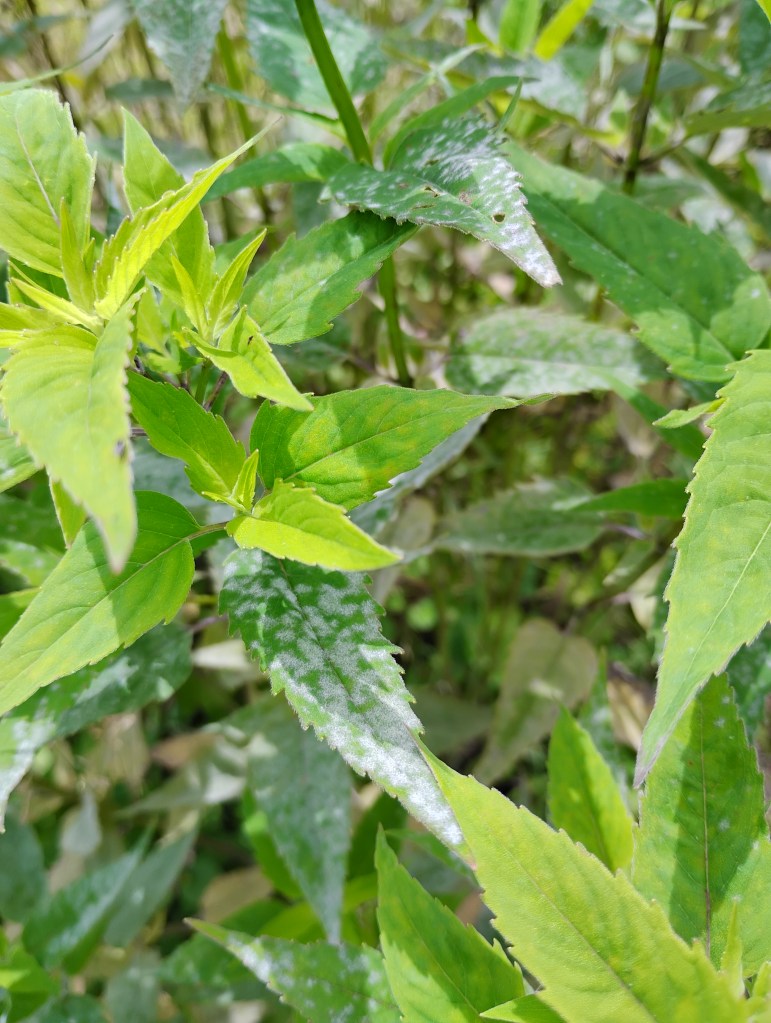
If you are a gardener, you may have noticed the symptoms of Powdery Mildew on certain plants—-Bee Balm and Zinnias are especially susceptible! Today’s newsletter will focus on Powdery Mildew—-how plants become infected, and what you can do about it!
Powdery Mildew spores overwinter in the soil or dead plant material, where they wait until plants return in the spring. The spores can find their way to new plant leaves by rain splashing up from the soil, dirt getting flung around by pulling nearby weeds, or by your hard-working hands touching the dirt then touching the leaves.
Once Powdery Mildew spores come into contact with your plant leaves, the plant has to resist the spores to the best of their ability. Ways to help your plant resist Powdery Mildew is by spacing plants out so that they have good air circulation, plucking off infected leaves, and keeping your plants watered so they are not stressed out by being thirsty.
If a plant succumbs to Powdery Mildew, though, I have found it is impossible to “cure” the plant. Prevention seems to be the best medicine, and I am always experimenting with different methods on my farm. My latest test seems to have yielded good results: At the end of the growing season last year (on Halloween!), I cut my Bee Balm down to the ground, removed the cut plants, then watered the soil with a neem oil mixture (I purchased Captain Jack’s Neem Oil from Apex True Value). Neem oil is a natural fungicide and insecticide derived from the Neem tree (native to India), and can be used on organic gardens.
This season I have been fascinated to observe that my experimental Bee Balm bed that I had watered with neem oil currently has NO signs of Powdery Mildew, while my other bed is…..quite infected. I took the below comparison pics this week—-you will notice that in my neem oil bed, I also have the plants spaced out more, and I left the weeds in place to minimize spores coming up from the soil (I will use any excuse not to weed). But in the infected bed, I have the plants packed pretty close together and (relatively) weed-free….
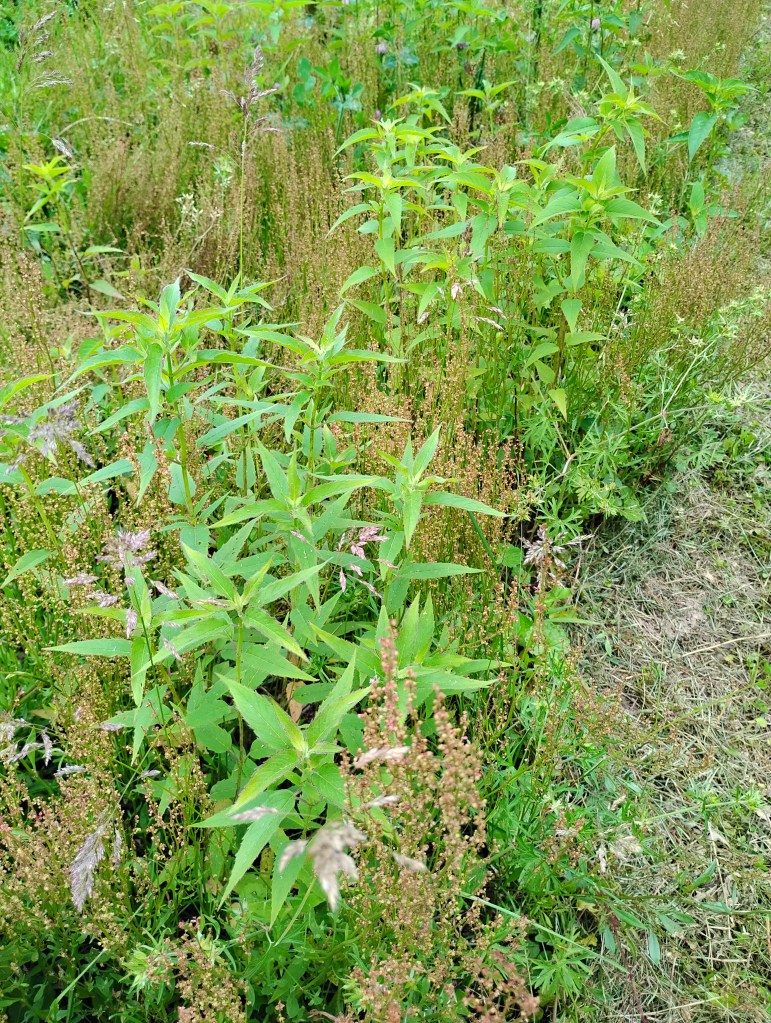
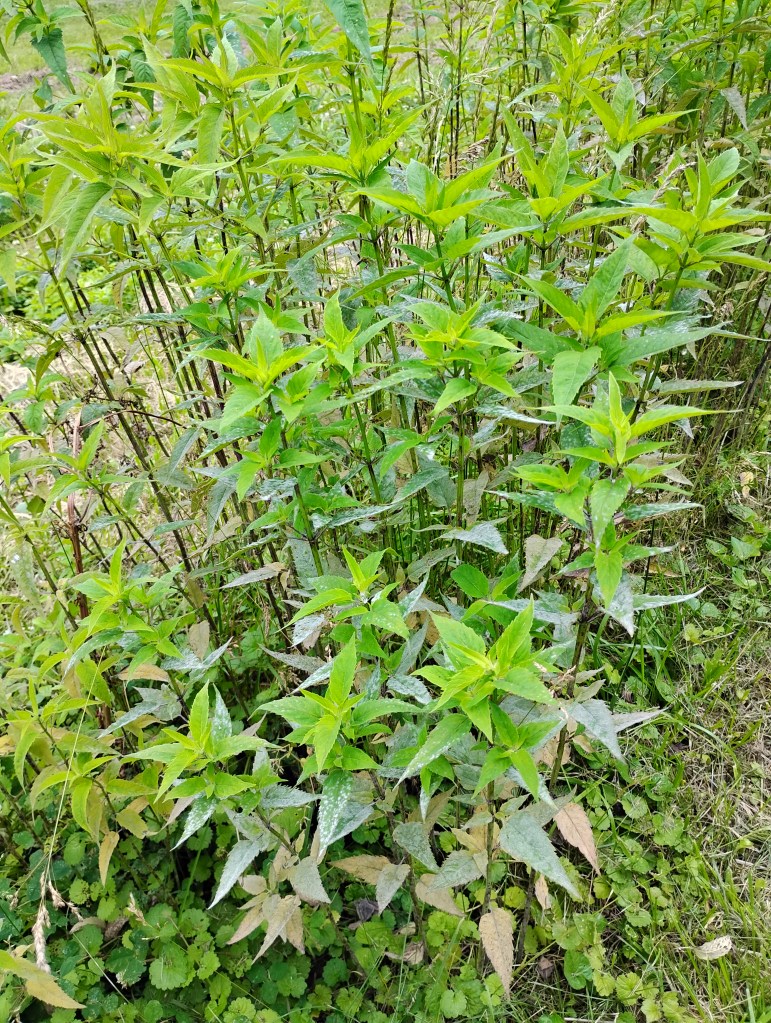
There you have it—-I will be applying neem oil to ALL my Bee Balm beds this fall!
Happy Gardening!!
Discover more from Little Muskingum Kettle Farm
Subscribe to get the latest posts sent to your email.

